
Jonathan Livingston Seagull
A seagull's quest for flight, freedom, and self-realization.
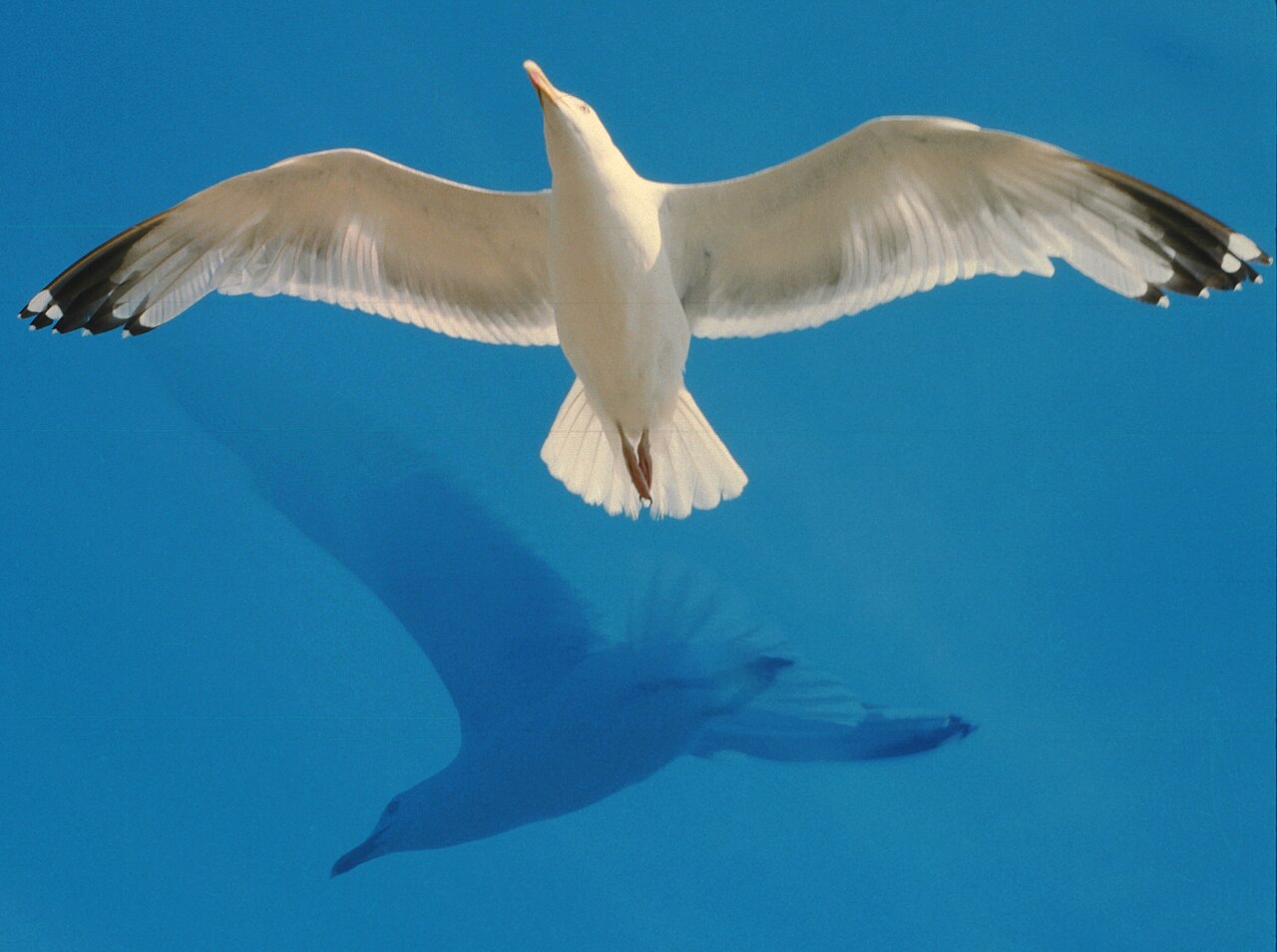
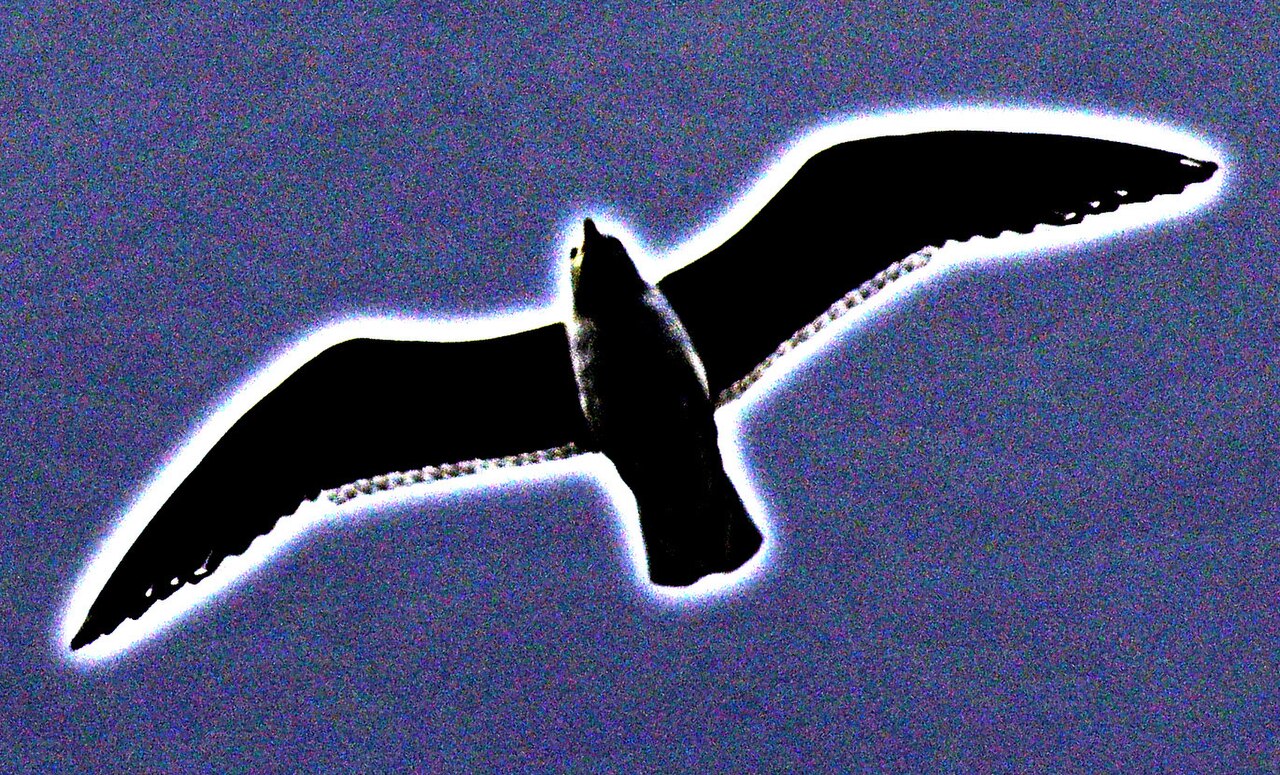
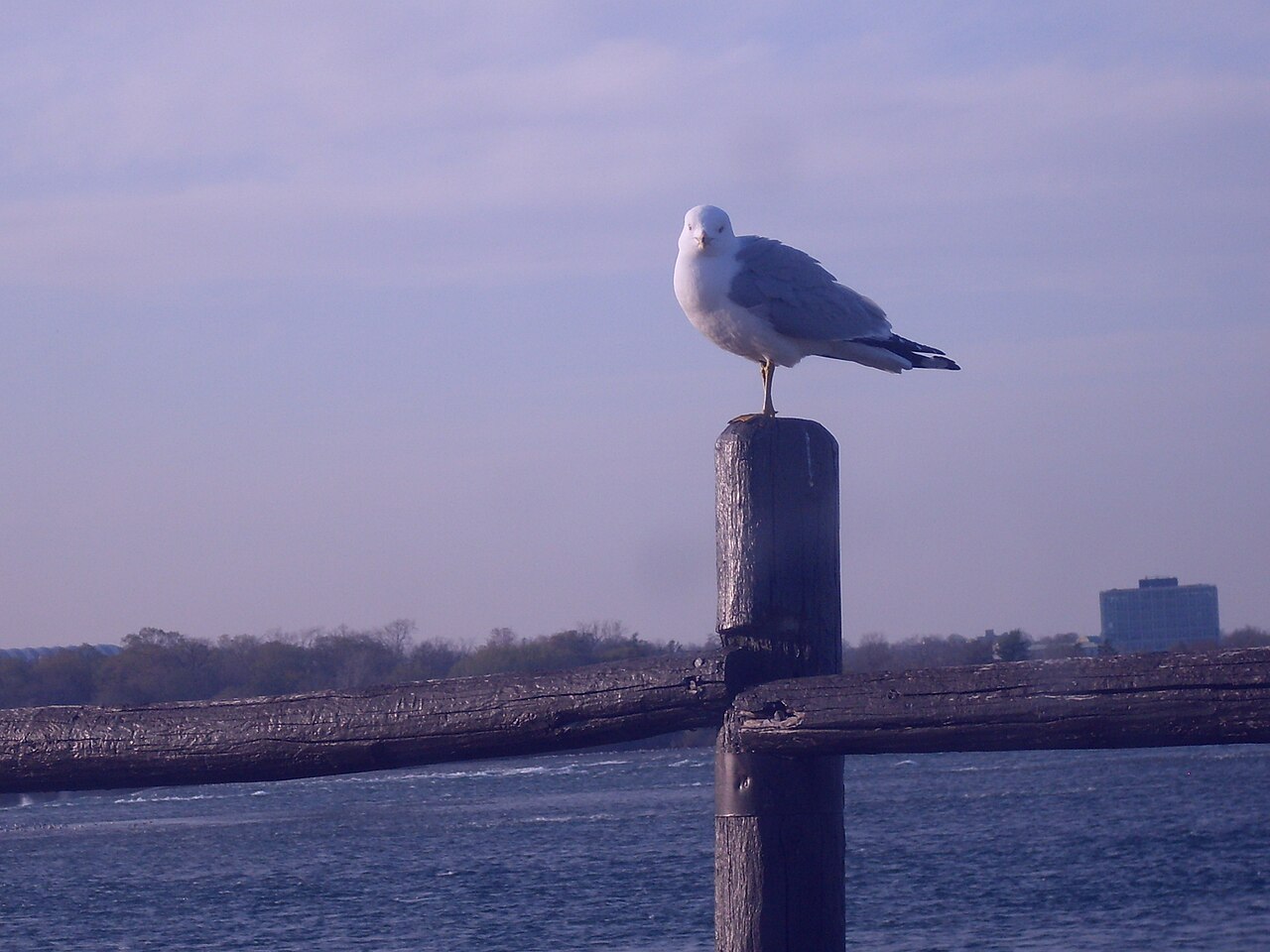
Jonathan Livingston Seagull is an allegorical novella by American writer Richard Bach, featuring black-and-white photographs by Russell Munson. The story follows a seagull devoted to mastering flight, self-discovery, personal reflection, and freedom. First published as a book in 1970 with minimal promotion, it reached number one on bestseller lists largely through word of mouth, and by the end of 1972 had sold over a million copies. In 2014, a reissue titled *Jonathan Livingston Seagull: The Complete Edition* added a 17-page fourth part.
**Plot**
**Part One** Jonathan Livingston Seagull is an independent bird frustrated by his flock’s focus on squabbling over scraps and mere survival. Unlike the others, he is consumed by a passion for flying, experimenting with his body and the air to achieve greater speeds. His nonconformity leads the flock to banish him as an “Outcast.” Undeterred, Jonathan continues his pursuit of flight, often succeeding. He lives a long, happy life, saddened only that the rest of the flock will never experience the full joy of flying. In old age, two radiant seagulls who share his abilities appear, telling him he has learned much but that they have come to take him “home” to go “higher.”
**Part Two** Jonathan enters a reality he believes is heaven, where gulls practice incredible maneuvers and speeds. His instructor, Sullivan, explains that a few gulls reach this higher existence, while most repeat the same world endlessly. The Elder Gull, Chiang, reveals that this is not heaven—heaven is achieving perfection itself, an ability beyond time and place. Chiang demonstrates perfect speed by vanishing and reappearing. When Jonathan asks to learn, Chiang says the secret is recognizing that one’s nature exists across all time and space. Jonathan follows Chiang’s teachings successfully. One day, Chiang transforms into a blinding light and, before disappearing, advises Jonathan to “keep working on love.” After reflecting, Jonathan decides to return to his original flock to teach what he has learned. There, he meets Fletcher Lynd Seagull, recently banished as an Outcast, and takes him as his first pupil.
**Part Three** Jonathan gathers a small group of Outcast students, with Fletcher as the star. He tells them that “each of us is in truth… an unlimited idea of freedom,” though the students think they are merely learning basic flying. For a month, Jonathan leads them in aerial stunts before the bewildered flock. Some gulls join the Outcasts; others label Jonathan a messiah or a devil. He feels misunderstood. One day, Fletcher dies in a midair collision. Awakening in another reality, he hears Jonathan’s voice teasing that transcending time and space must be taken step by step. Fletcher is resurrected among the astonished flock, some of whom fear his return. Jonathan insists Fletcher must learn to love the ignorant flock. As Jonathan’s body fades, he asks Fletcher to stop others from thinking of him as a god and advises: “find out what you already know.” Later, Fletcher faces a group of eager new students. He passes on Jonathan’s ideas that seagulls are limitless ideas of freedom and bodies are thought itself, but the young gulls are baffled. Fletcher realizes why Jonathan taught slowly, step by step. Smiling, he muses that if there are no limits, he will see Jonathan again one day.
**Part Four (in the 2014 reprint)** In 2013, Richard Bach revisited an unpublished fourth part he had written alongside the original story. He edited and polished it, then sent it to a publisher. Bach said he was inspired to finish this part by a near-death experience from a nearly fatal plane crash in August 2012. In February 2014, Bach’s 138-page work *Illusions II: The Adventures of a Reluctant Student* was published as a Kindle Direct booklet, also alluding to that experience. In October 2014, *Jonathan Livingston Seagull: The Complete Edition* was published, including Part Four. This part is set several hundred years after Jonathan and his students have left the flock. Their teachings have become venerated rather than practiced. The birds spend their time extolling Jonathan and his students, performing rituals, and using demonstrations of respect as status symbols, while neglecting flying for its own sake. Eventually, some birds reject the ceremony and simply start flying.
Lore & Background
The story follows Jonathan Livingston Seagull, an independent thinker frustrated with his flock's focus on survival. Passionate about flight, he experiments to achieve faster speeds, leading to his banishment as an Outcast. He lives a long, happy life, sad only that his flock will never know the glories of flying. In his old age, two radiant seagulls take him to a higher reality where he learns from the Elder Gull Chiang that heaven is the achieving of perfection itself. Jonathan eventually returns to his original flock to teach what he has learned, taking on Fletcher Lynd Seagull as his first pupil. He amasses a group of Outcasts, but feels misunderstood when some label him a messiah or devil.
Reader's Guide
Jonathan Livingston Seagull is significant as a sleeper hit that defied initial obscurity to become a cultural phenomenon. The book's themes of individuality, self-discovery, and transcendence resonated widely, though booksellers struggled to classify it—some placing it under nature, religion, photography, or children's books. The story's allegorical nature has led to varied interpretations, with some early commentators emphasizing the first part. The book remains a touchstone for discussions of personal freedom and spiritual growth.
Did You Know?
- The book was rejected by several publishers before Macmillan acquired it for a $2,000 advance.
Early Life, War Service, and the Galapagos Years
Born on December 7, 1924, Jack Craig Couffer A.S.C. entered a world that would soon demand his service. During the Second World War, he served in the United States Army, an experience that left a lasting imprint on his creative life. After the conflict ended, he channeled his wartime memories into a book about the "Bat Bomb" project, an ambitious and unusual military plan to harness bats as carriers of incendiary devices. This early foray into writing revealed a mind that blended scientific curiosity with narrative storytelling. Following the war, Couffer pursued formal education at the University of Southern California School of Cinema-Television, laying the groundwork for his filmmaking career. But perhaps the most transformative experience of his youth came in the 1950s, when he and a friend set sail for the Galapagos Islands. They remained there for ten months, an immersion in wild nature that Couffer later recalled as the best period of his entire life. That extended sojourn in one of the planet's most extraordinary ecosystems clearly shaped the naturalist sensibility he would bring to his future work behind the camera.
A Decade and Beyond at Walt Disney Studios
Couffer's own account of his career path reveals a man who saw himself as a hybrid of naturalist and filmmaker. That self-perception led him directly to Walt Disney Studios, where he joined as a cameraman on the early True Life Adventure series of nature documentaries. His tenure at Disney stretched beyond ten years, during which he cycled through multiple roles, including writer, director, producer, and cameraman, contributing to more than two dozen films. This breadth of involvement gave him an unusually complete understanding of how a nature film moves from concept to final cut. One of his most notable Disney projects was The Legend of the Boy and the Eagle (1967), a documentary he wrote, directed, and filmed himself, showcasing his all-around creative command. The Disney years also cemented his specialization in animal and nature cinematography, a niche that would define his reputation throughout the rest of his career. His work on these projects demonstrated a rare ability to capture the behavior of living creatures with both scientific patience and cinematic flair, skills he had first honed during his months among the wildlife of the Galapagos.
Cinematography, Collaboration, and the Oscar Nomination
Beyond his Disney tenure, Couffer built a distinguished body of work across independent and major studio productions as well as television. His credits include the influential experimental documentary The Savage Eye (1959), for which he served as cinematographer alongside director Joseph Strick. That collaboration proved enduring: Strick went on to co-produce two drama films that Couffer both directed and wrote, including Ring of Bright Water (1969) and The Darwin Adventure (1972). Perhaps the most prominent recognition of his career came with his nomination for the Academy Award for Best Cinematography for the 1974 film adaptation of Richard Bach's novel Jonathan Livingston Seagull. The nomination placed his name alongside the most celebrated cinematographers of the era and highlighted his skill in translating a literary, almost spiritual narrative into a visually compelling cinematic experience. Couffer's range across genres, from experimental documentary to studio drama to nature filmmaking, demonstrates a versatile artist who refused to be confined to a single mode of storytelling.
Later Life, Prolific Writing, and a Long Career
Jack Couffer's creative life extended well beyond the camera. In addition to his wartime book about the Bat Bomb project, he published ten further works spanning both non-fiction and fiction, underscoring a lifelong commitment to the written word. Even in his final decades, he remained remarkably active. In 2019, at the age of 94, he was still working from his home in Corona Del Mar, California, a testament to a career that spanned nearly eight decades. He passed away in July 2021 at the age of 96, in a nursing facility in Costa Mesa, California. His life's arc, from a young soldier in World War II, to a sailor in the Galapagos, to a multi-hyphenate filmmaker at Disney, to an Oscar-nominated cinematographer, and finally to a prolific author, paints the portrait of a restless, curious creative who never stopped making. His legacy endures in the nature documentaries he helped pioneer, the experimental films he shot, and the countless readers who encountered his books across a wide range of subjects.
Gallery
Frequently Asked Questions
Who is Jonathan Livingston Seagull?
He is a seagull who rejects his flock's routine of merely scavenging for food and instead devotes himself to mastering the art of flight as a path to personal freedom and self-realization.
What is Jonathan Livingston Seagull about?
It is an allegorical novella that follows a seagull's spiritual journey toward transcending physical limits, questioning the beliefs imposed by his community, and discovering that true mastery of flight is an expression of pure consciousness.
Who wrote Jonathan Livingston Seagull?
American author Richard Bach wrote the text, and the book was illustrated with black-and-white photographs taken by Russell Munson.
How does Jonathan Livingston Seagull's story end?
After being exiled by his flock, Jonathan ultimately achieves a state of pure thought and flight beyond time and space, and the story closes with him returning to a shore to teach a young seagull the same principles he once learned.
More in Novels & Major Fiction 1-24
Spotted an error? Know more?
This is a living reference — every entry is fact-audited, and reader corrections feed straight into our audit queue. Suggest an edit · See this site's audit record